What is SpBellsPSP?
SpBellsPSP is an MRC funded trial designed to Validate the Specificity of the Bells test for Progressive Supranuclear Palsy. The trial is led by Professor Dan Smith (Durham University). It collaboration between Durham University, Oxford University, 5 NHS trusts (Newcastle University Hospitals, Gateshead Health, South Tyneside and Sunderland, South Tees and Southampton Hospitals) and will be delivered in the community by the RRDN Agile team. This research has been approved by the North East – Tyne & Wear South Research Ethics Committee: 26/NE/0055. Find out more about the research team
Why is a trial needed?
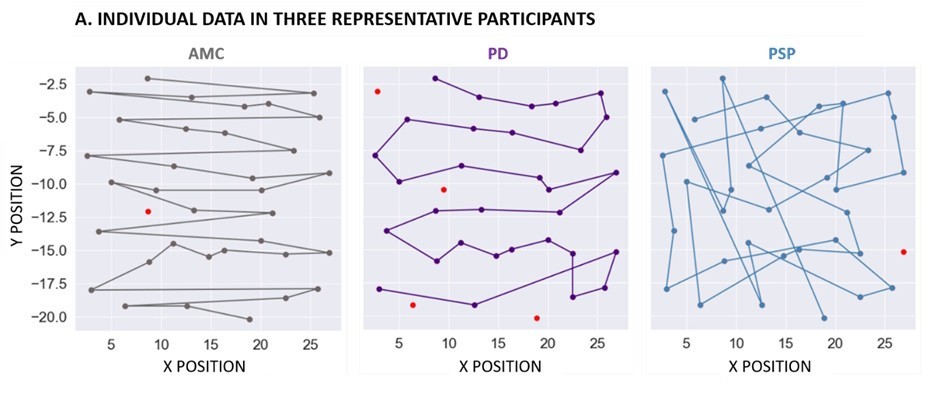
Progressive Supranuclear Palsy (PSP) is a rare and incurable neurodegenerative disease that affects ~7 in 100,000 people. People with PSP can have many of the same symptoms as people with Parkinson’s disease and their first diagnosis is often Parkinson’s disease. On average, it takes about 3 years for a patient to get their correct PSP diagnosis. This delay creates uncertainty for patients and restricts their ability to access appropriate support. Patients also require many additional hospital visits which is costly and burdensome for them and the NHS. Delayed diagnosis is also challenging for developing new treatments, because researchers cannot be certain which patients have PSP. Patient groups and doctors agree that research into new tools that address the challenge of early and accurate differential diagnosis of PSP and PD should be a high priority. Our previous research shows that people with PSP also have severe problems with attention, and particularly with the ability to find a target object hidden among distractors (e.g. a ‘Where’s Wally’ type of puzzle), whereas people with Parkinson’s disease do not have this problem. The ability to search for a target can be measured scientifically using a test called the Bells Test (see Figure 1) which measures how quickly and accurately a person can find and circle bell-shaped objects hidden among other objects. In a recent study funded by the Vivensa Foundation we found that people with PSP had very disorganised search compare to people with Parkinson’s disease (see Figure 2). In fact, the Bells test can discriminate between people with PSP and PD with 90% accuracy. The aim of this project, which is generously funded by the MRC, is to validate this finding in a new group of people with PSP and Parkinson’s disease.

How will people with PSP benefit?